Simple Sewing Tools and Textile Care for Hand Makers
Simple Sewing Tools and Textile Care for Hand Makers
Hand sewing and small textile projects thrive on clarity of tools and consistent habits. This guide covers a minimal toolkit, basic care for threads and fabrics, and a few techniques that increase the longevity and quiet beauty of stitched work.
A compact toolkit
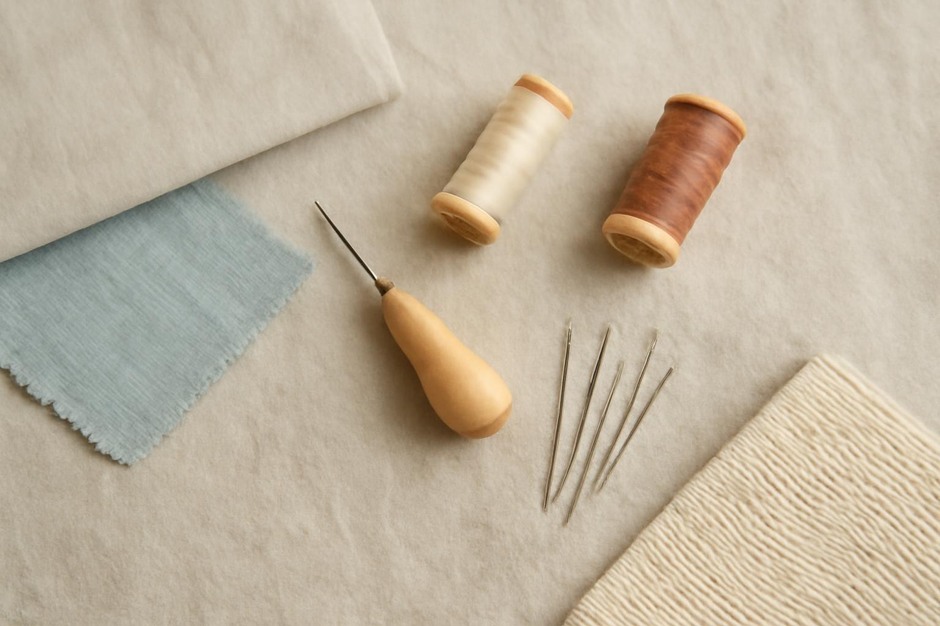
- Needles — a small assortment: sharps for woven fabrics, embroidery needles for decorative work, and upholstery or sash needles for heavier material.
- Thread — strong polyester or cotton-wrapped polyester for general use; linen thread for traditional or visible seams.
- Awl and thimble — an awl to make pilot holes in heavier cloth, and a thimble to protect fingers during tight stitches.
- Small scissors and snips — for clean thread ends and precise trimming.
- Pins and clips — hold layers together without slipping while you stitch.
Fabric and thread care
Pre-treat fabric when appropriate: pre-wash cottons to prevent later shrinkage, and press seams as you go. Store threads in a dry place away from direct sunlight to reduce fading and weakening. Simple care routines extend the life of materials and finished pieces.
Hand-stitch basics that last
Choose a stitch appropriate to load and visibility. Running stitch and backstitch are fast and reliable for seams; slip stitch is discreet for linings and repairs. Consistent stitch length and tension give structure and help pieces wear evenly.
Checklist: preparing for a small project
- Select fabric and pre-treat as needed (wash, press)
- Choose thread that matches strength needs
- Gather needles, scissors, pins, and a thimble
- Mark seam lines with removable marks
- Plan sequence: seams, pressing, finishing
Reflection prompts
- Which stitch do you rely on most and why? What might you learn from practicing a different one for a week?
- How do you store sewing projects in progress to protect them from dust and distortion?
- What small finishing detail could make a seam more durable or comfortable—facing, binding, or pressing?
Hand sewing rewards careful preparation and modest, repeatable habits. A small, well-kept set of tools encourages experimentation and makes repair and alteration straightforward. Over time, neat stitching becomes both a technical skill and a slow curiosity: noticing how materials respond to thread and pressure.