Natural Pigments and Ground Colour: A Gentle Introduction
Natural Pigments and Ground Colour: A Gentle Introduction
Working with natural pigments can connect you to long craft traditions and reveal subtleties of colour that manufactured tubes sometimes obscure. This guide introduces basic steps for selecting, grinding, and storing pigments, along with simple binding options and testing methods that help you understand the material.
Choosing pigments and basic safety
Natural pigments range from earths (ochres, umbers) to mineral and plant-derived colours. Many are stable and straightforward, but some historic pigments contain toxic elements. Practice simple precautions: avoid inhaling powders, work with a dust mask in a ventilated space, and keep pigments separated and clearly labeled.
Grinding fundamentals
Grinding transforms a powder into a wet paste that binds predictably. Use a smooth, hard surface like a glass slab and a muller or small pestle.
- Measure a small pile of pigment and a few drops of binder or medium.
- Work the pigment and medium together, pressing and grinding until you reach a smooth paste. This removes grit and helps you assess tinting strength.
- Adjust with small additions of medium to achieve spreadability appropriate to your technique.
Binders and simple recipes
Binders determine how a colour adheres and ages. Common, beginner-friendly binders include:
- Gum arabic — for watercolour and ink; transparent and easy to mix.
- Linseed oil — for oil colours; slower to dry and more robust for layering.
- Egg tempera — a traditional, fast-drying binder with a delicate matte finish.
Start with small experimental batches to learn how a pigment behaves with each binder before committing to larger quantities.
Storage and testing
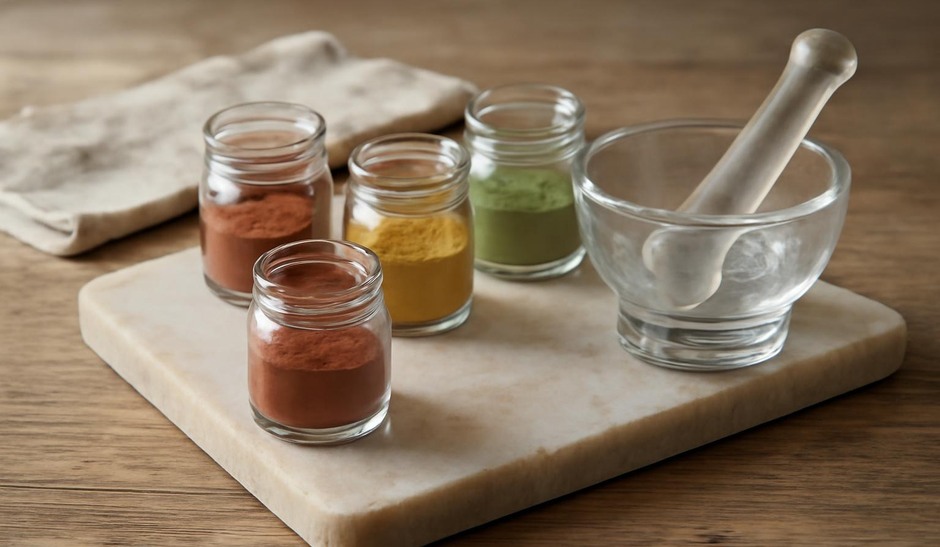
Store pigments in small sealed jars or tubes with clear labels and dates. Keep them dry and away from direct sunlight. Make small colour charts and paint swatches to record hue, opacity, and binder response.
Checklist: making a small batch
- Clean glass slab and muller
- Small amount of pigment
- Appropriate binder measured in drops
- Label and small jar for storage
- Notebook for swatches and notes
Reflection prompts
- How does the ground pigment’s character differ from pre-made paint in the same hue?
- What information about a pigment would you record to help you reproduce it later—proportions, binder, grinding time?
- Which small test could reveal how a pigment handles overpaint or varnish?
Grinding colour is an invitation to slow observation: you learn the pigment by touch and sight. Begin with modest experiments and careful records. Over time you will build a palette you understand intimately—how each ground colour lays down, changes with binder, and holds up under repeated handling.