A Simple Routine for Caring for Wooden Tool Handles
Problem
Wooden handles are comfortable, repairable, and familiar, but they also show wear: grime from hands, sweat that darkens and weakens fibers, rough spots and splinters, finishes that flake, and occasional loosening where metal meets wood. Left unaddressed, what starts as a small snag becomes an ergonomics issue or a safety hazard. Most makers want a simple, repeatable routine that keeps handles reliable and pleasant without specialty tools or a big time investment.
Principles
Keep four simple principles in mind when caring for wooden handles:
- Cleanliness: Remove dirt and oils so finishes and treatments can penetrate uniformly.
- Moisture balance: Prevent extremes—neither bone-dry nor waterlogged. Stable moisture reduces cracking and swelling.
- Protection: Use penetrating oils and surface waxes to seal against sweat and grime while preserving tactile warmth.
- Early repair: Fix small rough spots or loose fittings early; sanding and simple tightening often prevent bigger repairs later.
Examples
Below are common handle conditions and straightforward responses you can do at home. Pick materials that are labeled for woodworking and appropriate for hand tools.
1. Lightly dirty or sticky handles
Use a soft cloth dampened with warm water and a tiny drop of mild dish soap. Wipe the handle, then wipe again with a clean damp cloth to remove soap. Dry thoroughly. For stubborn grime, a little fine steel wool (0000) rubbed gently along the grain can help remove embedded dirt; follow with drying and conditioning.
2. Dry, dull handles
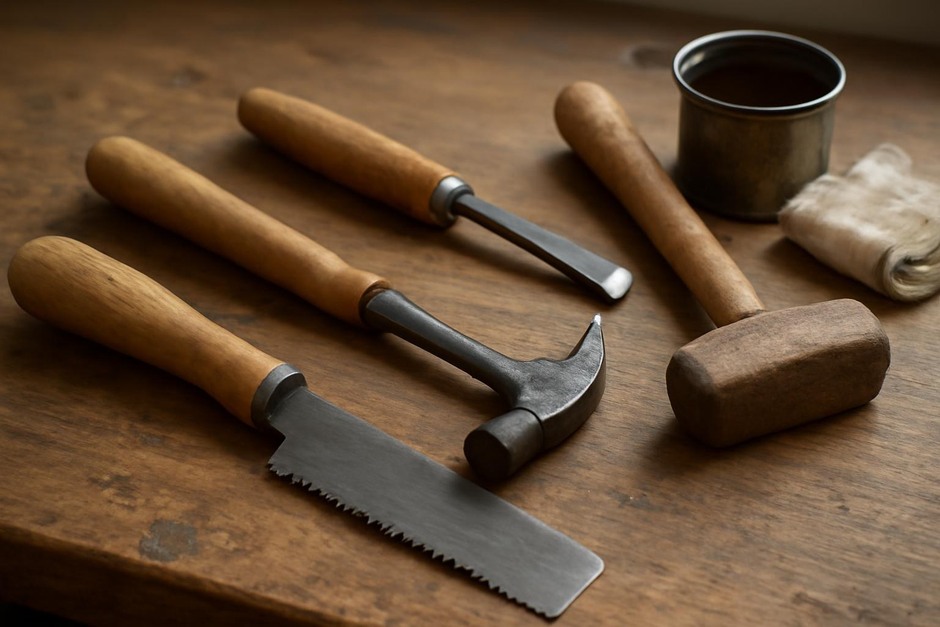
After cleaning, apply a small amount of a penetrating oil—raw linseed oil, tung oil, or a food-grade mineral oil—rubbed in with a cloth. Allow 10–30 minutes to soak, then wipe off excess. Repeat once or twice until the wood looks and feels refreshed. Let the handle cure overnight before use.
3. Rough spots or minor splinters
Lightly sand the affected area with 220–320 grit sandpaper, always following the grain. Remove dust with a tack cloth and apply oil, finishing with a thin coat of beeswax or paste wax buffed to a smooth sheen. Wax adds surface protection and improves feel without building a thick film.
4. Varnished or painted handles
If a handle already has a varnish or paint, treat it like finished furniture: clean gently, avoid penetrating oils (they won’t soak in), and apply a thin coat of wax if the finish is intact. If the finish is flaking, consider stripping and refinishing or replacing the handle if necessary.
5. Loose ferrules or fittings
Small looseness at a chisel ferrule or hammer head is often due to seasonal shrinkage. For mild movement, drive the handle a bit deeper and secure with a wedge if the tool design allows. For anything more than minor play, plan a handle repair or replacement—tight fittings are safer than improvised fixes.
Short Repeatable Routine (Daily → Monthly)
- Daily (after use): Wipe handles with a dry cloth to remove sweat and shavings. Quick habit prevents buildup.
- Weekly: Inspect for rough spots, cracks, or loosening. Sand a small snag and smooth with a cloth if needed.
- Monthly: Clean with a damp cloth if dirty. Apply a light coat of penetrating oil to unfinished handles and wipe off excess.
- Seasonal (every 3–6 months): Give handles a deeper maintenance session—220–320 sanding where needed, oil treatment, and a buffed beeswax finish for protection.
Practice Checklist
Keep this checklist near your bench or on your phone. It takes a few minutes and keeps handles comfortable and dependable.
- Daily: wipe handles with a dry cloth after use
- Weekly: visually inspect for splinters, cracks, and looseness
- Monthly: clean if needed; apply one light coat of penetrating oil to unfinished handles
- Seasonal: sand rough spots (220–320 grit), oil thoroughly, then finish with beeswax or paste wax
- Supplies to keep on hand: soft cloths, 220–320 sandpaper, penetrating oil (linseed/tung/mineral), beeswax or paste wax, fine steel wool (0000)
Maintaining wooden handles is mostly about small, consistent habits rather than dramatic repairs. A few minutes of cleaning and the occasional oil-and-wax treatment will keep your tools feeling better in hand and lasting longer—so the making stays comfortable, precise, and quietly dependable.